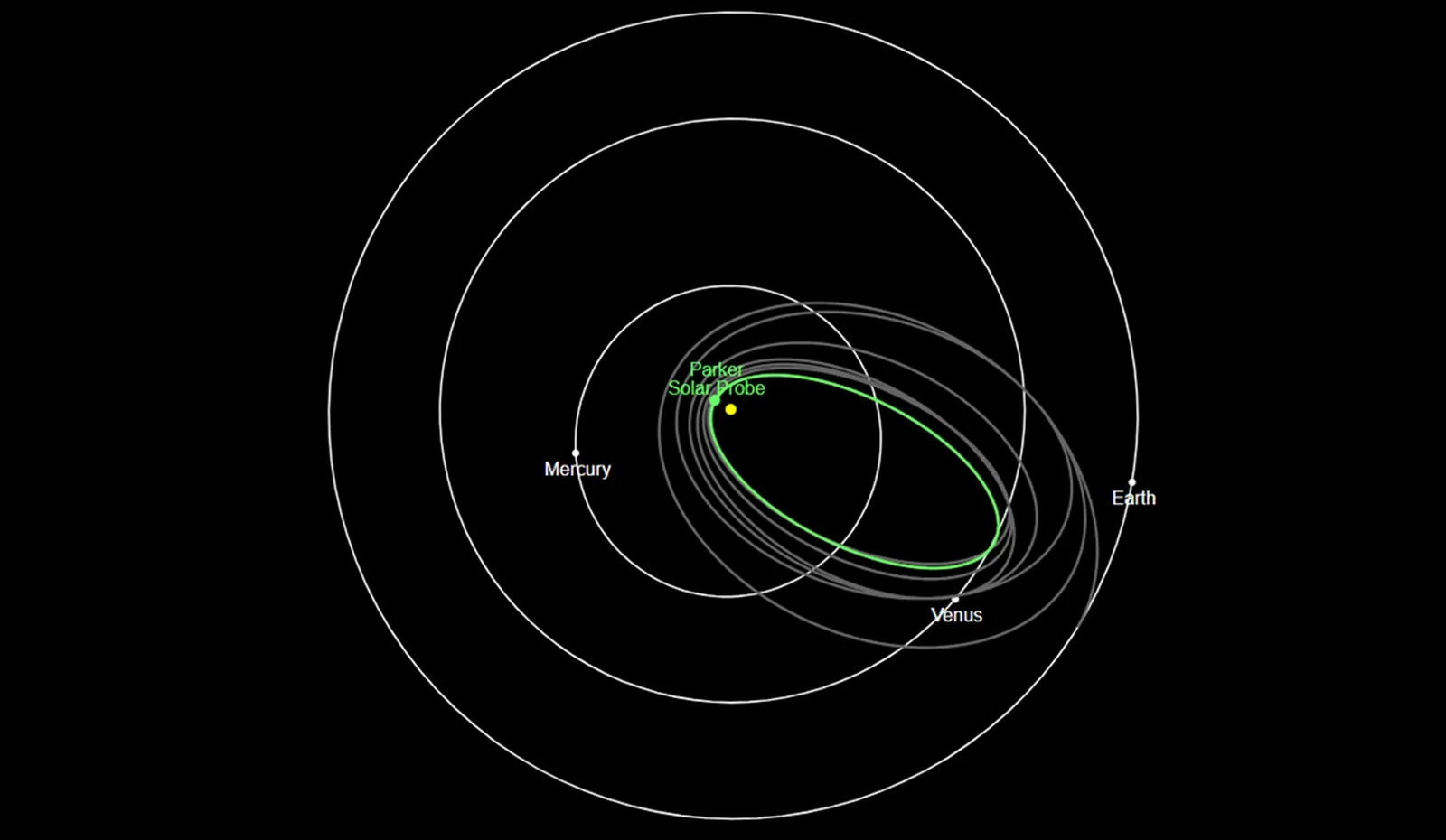
NASA reported on September 10, 2026, that Parker Solar Probe had completed its 29th close approach to the Sun on September 4 and transmitted a beacon indicating normal spacecraft systems on September 7. The encounter included about nine days of planned autonomous operations and limited communication around perihelion. The spacecraft again came within roughly 3.8 million miles of the solar surface and reached about 430,000 miles per hour. Its four science instrument suites collected data during an observation window running from August 30 through September 9, including measurements of the corona, solar wind, and solar activity, plus imaging of structures near the Sun's north pole. The close approach and beacon check occurred on September 4 and 7; NASA published the status update on September 10. The agency also says the mission has been extended into 2029. A normal beacon is not presented here as confirmation that all science data have already been downlinked or analysed.
International space · Space technology
Parker Solar Probe Checks In After Its 29th Close Solar Approach
Parker Solar Probe completed its 29th close approach to the Sun on September 4 and returned a normal-system beacon on September 7. The pass again matched the mission's record distance of about 3.8 million miles and speed of about 430,000 miles per hour.
Deep space explorationSolar science
Related launch missions
No linked mission.